
According to the American Academy of Pediatric Dentistry, children should see a pediatric dentist by their first birthday or within six months of getting their first tooth—whichever comes first. That may sound early, but there’s a good reason for it.
Baby teeth usually start coming in between six and ten months of age. For some kids, it can happen even earlier. As soon as that first tooth appears, children are at risk for tooth decay. And the earlier decay starts, the more likely it is to affect other aspects of a child’s health.
Getting an early start with pediatric dentistry helps prevent problems before they begin—and gives parents the knowledge to support their child’s oral health as they grow.
When Does the First Tooth Come In?
For most children, the first tooth shows up between 6 and 10 months of age. The lower front teeth typically come in first, followed by the upper front teeth. Teething patterns can vary a bit, but by age three, most children have a full set of 20 baby teeth.
Even though these teeth will fall out eventually, they serve important roles in speech, chewing, and guiding the placement of permanent teeth. Monitoring them early gives your child the best chance of avoiding preventable problems down the line.
That’s why early dental care is more than just a routine checkup—it’s the foundation for lifelong oral health.

Why First Visits Matter
Kids don’t need a full set of teeth to benefit from their first dental visit. In fact, the trouble often begins long before children complain of pain or show visible signs of problems. Understanding what a pediatric dentist looks for early on can make a big difference in protecting your child’s oral health.
Pediatric dentists can spot early issues and help parents take steps to prevent them.
Here’s why that first visit is so important:
- It helps catch early signs of tooth decay or gum issues.
- It allows the dentist to assess the development and spacing of baby teeth.
- It gives parents a chance to learn how to clean their baby’s mouth and brush their teeth properly.
- It provides guidance on everyday habits—like thumb sucking, bottle use, and diet—that affect oral health.
- It reduces dental anxiety by helping children get used to the dentist from a young age.
When kids get in the habit of visiting the dentist early, future appointments become much more manageable. They’re less likely to associate dental care with fear or discomfort—because their first few visits are low-stress and pain-free.
What Happens During the First Visit?
A child’s first visit to the pediatric dentist is often where parents see firsthand what a pediatric dentist does, and it’s usually quick, simple, and focused on prevention. Many parents are surprised by how easy it is—and how much they learn from just one appointment.
During the visit, you can expect the following:
- A short review of your child’s health history and dental habits.
- An exam of teeth, gums, tongue, and jaw to check for early concerns or signs of decay.
- A gentle teeth cleaning, if there is plaque or staining on the teeth.
- A fluoride application, if appropriate, to strengthen tooth enamel.
- A discussion about brushing, nutrition, use of pacifiers or bottles, and overall oral hygiene.
- Time to ask any questions you have about how to care for your child’s teeth.
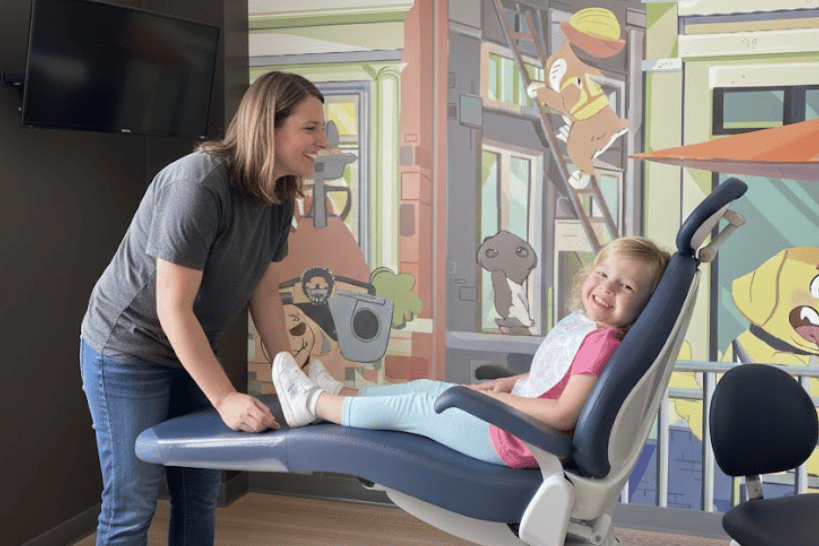
In many cases, toddlers may sit on a parent’s lap so they feel more secure during the exam. The goal is to make the experience calm and positive. Pediatric dentists are trained to handle young children and understand how to ease them into dental care without fear.
Why Baby Teeth Matter More Than You Think
It’s easy to overlook baby teeth, especially knowing they’ll fall out eventually. But while they are temporary, they have lasting effects on your child’s health and development.
Baby teeth help your child chew food properly and speak clearly. They also guide permanent teeth into the right position. When baby teeth are lost too soon—whether from decay or injury—it can affect the alignment of adult teeth. In some cases, it can lead to crowding or bite problems that require orthodontic treatment down the road.
Tooth decay also affects more than the mouth. If left untreated, it can cause pain, infection, and problems eating or sleeping. It’s one of the most common childhood diseases, but it’s almost always preventable with early and routine care.
How Parents Can Support Oral Health at Home
Good dental care doesn’t start in the dental chair—it starts at home. Parents play the most important role in keeping baby teeth healthy, especially after that first visit.
Start by:
- Wiping your baby’s gums with a soft cloth after feedings.
- Brushing with a small toothbrush and a tiny amount of fluoride toothpaste (about the size of a grain of rice) once the first tooth appears.
- Avoiding sugary drinks in bottles or sippy cups, especially at bedtime.
- Offering water between meals to rinse teeth and gums.
- Scheduling dental visits every six months, starting with the first one.
Practicing good dental care early helps children view brushing and dentist visits as routine—not a reaction to pain or emergencies. And setting that tone starts at home with consistent habits.
When to Call the Dentist Between Visits
Most children should see a pediatric dentist every six months once they’ve had their first visit. But sometimes, problems can show up between checkups.
Reach out to your pediatric dentist in Canal Winchester, Ohio, if your child shows signs like:
- Brown or white spots on their teeth
- Swollen or bleeding gums
- Sensitivity to hot or cold foods
- Signs of pain when chewing or brushing
- A chipped or knocked-out baby tooth
When in doubt, it’s always best to check in. Pediatric dentists are trained to handle these situations and can often catch and treat a problem before it gets worse.
A Simple Step That Makes a Big Difference
Knowing when kids should see a pediatric dentist is one of the simplest—and most effective—ways to protect their health. According to the American Academy of Pediatric Dentistry, children should have their first visit by their first birthday or when their first tooth comes in, whichever happens first.
It may feel early, but starting dental visits around the time baby teeth emerge helps prevent tooth decay and other problems long before they start. Pediatric dentists are trained to work with young children and guide families through each stage of dental care—with calm, clear support every step of the way.
Tooth decay is common, but it’s not inevitable. A child’s first dental visit sets the tone for how they view oral health for the rest of their life. The sooner they begin, the easier it is to build habits that last.